-
Award
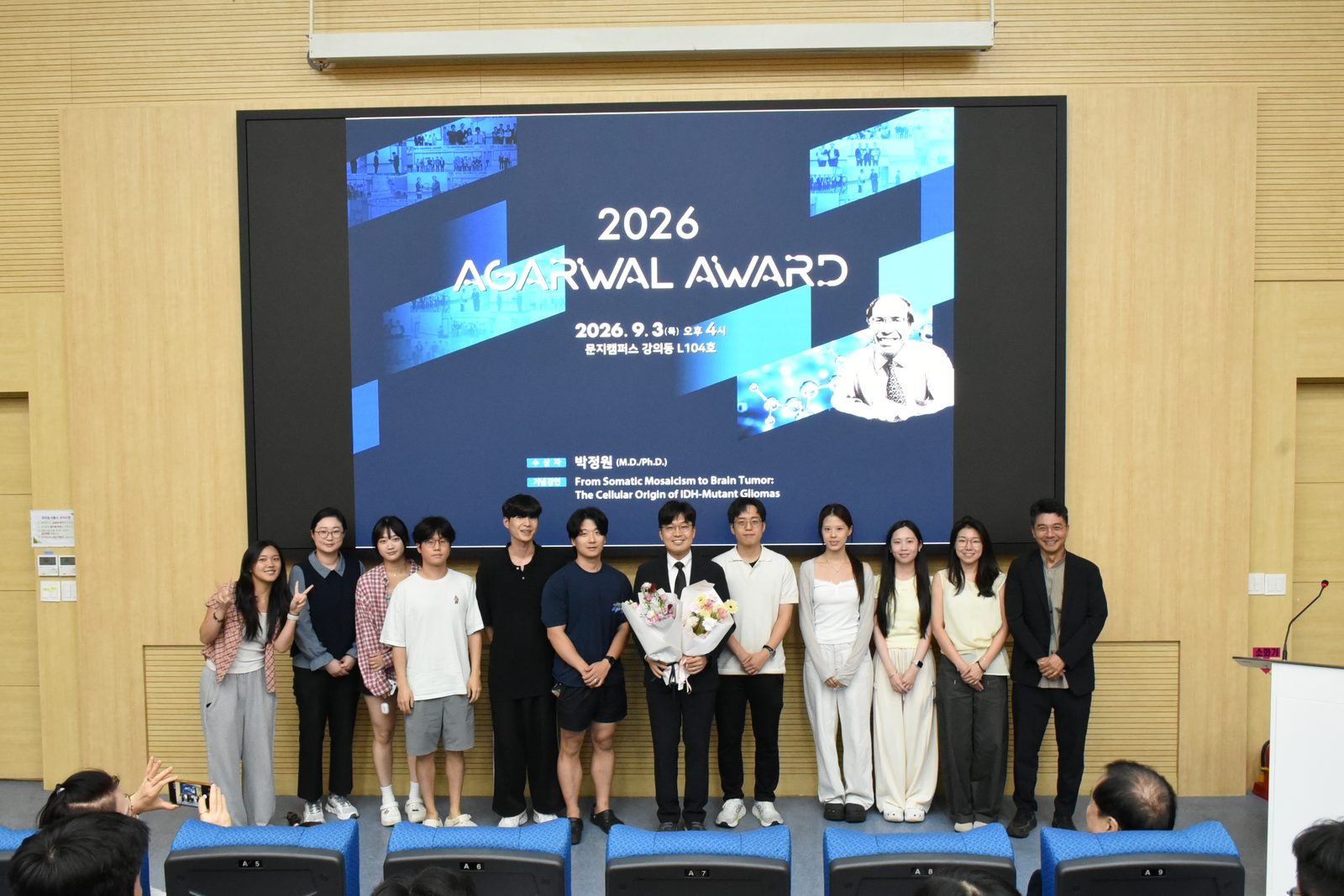
Dr. Jung Won Park with laboratory members and colleagues at the 2026 Agarwal Award ceremony. Dr. Jung Won Park, M.D., Ph.D., received the 2026 Agarwal Award at a ceremony held on September 3, 2026, at KAIST Munji Campus.
During the ceremony, Dr. Park delivered a lecture titled “From Somatic Mosaicism to Brain Tumor: The Cellular Origin of IDH-Mutant Gliomas.” Members of the Translational Neurogenetics Lab joined the event to celebrate this achievement.
Congratulations to Dr. Park on this well-deserved recognition.
-
Award
Prof. Jeong Ho Lee received the 8th Yonsei Jorakgyo Medical Award at a ceremony held on April 10, 2026 at the Eunmyung Auditorium of Severance Hospital. The prize was raised to KRW 100 million from this eighth edition, up from KRW 50 million in previous years.
The award recognized his proposal that acquired mutations arising in brain stem cells — brain somatic mosaicism — are a direct cause of intractable brain disorders including epilepsy, brain tumors and Alzheimer’s disease, and his work turning that idea into new methods of genetic diagnosis and treatment.
-
Award
SoVarGen, the faculty start-up founded by Prof. Jeong Ho Lee, received the Technology Export Award at the 27th Korea New Drug Development Awards. The ceremony was held on February 27, 2026.
The award recognized the global out-licensing of SVG105, an antisense oligonucleotide for intractable epilepsy. SVG105 was judged a first-in-class candidate that precisely modulates the gene underlying the disease, building on the finding — first established by the laboratory — that somatic mutations are a central cause of intractable epilepsy in children.
-
Paper
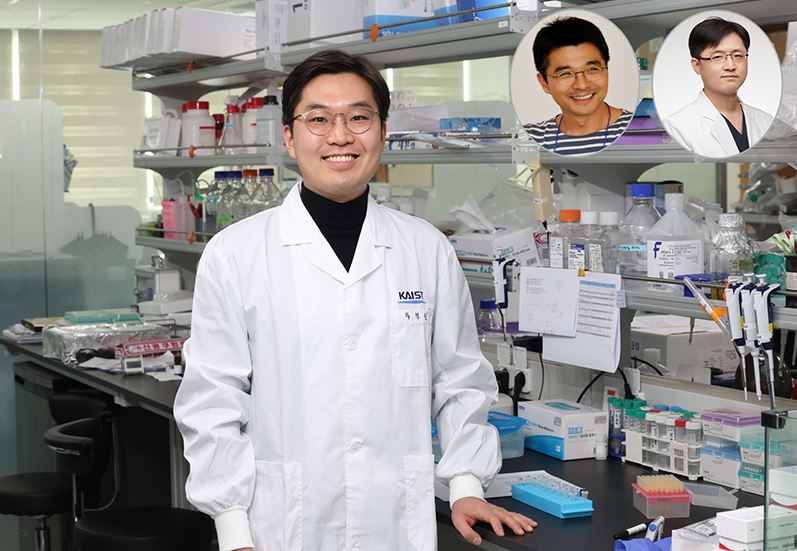
Dr. Jung Won Park, sole first author of the study, with co-corresponding authors Prof. Jeong Ho Lee and Prof. Seok-Gu Kang. Photo courtesy of KAIST. Dr. Jung Won Park’s study, “IDH-mutant gliomas arise from glial progenitor cells harboring the initial driver mutation,” has been published in Science.
The study revealed that IDH-mutant gliomas originate from glial progenitor cells carrying the initial IDH mutation. By integrating deep sequencing of human brain tissues, cell-type–specific mutation analysis, spatial transcriptomics, and in vivo modeling, the researchers traced the cellular origin and evolutionary trajectory of these tumors.
Dr. Park served as the sole first author, while Professor Jeong Ho Lee and Professor Seok-Gu Kang served as co-corresponding authors.
Congratulations to Dr. Park and all collaborators on this important achievement.
-
Event
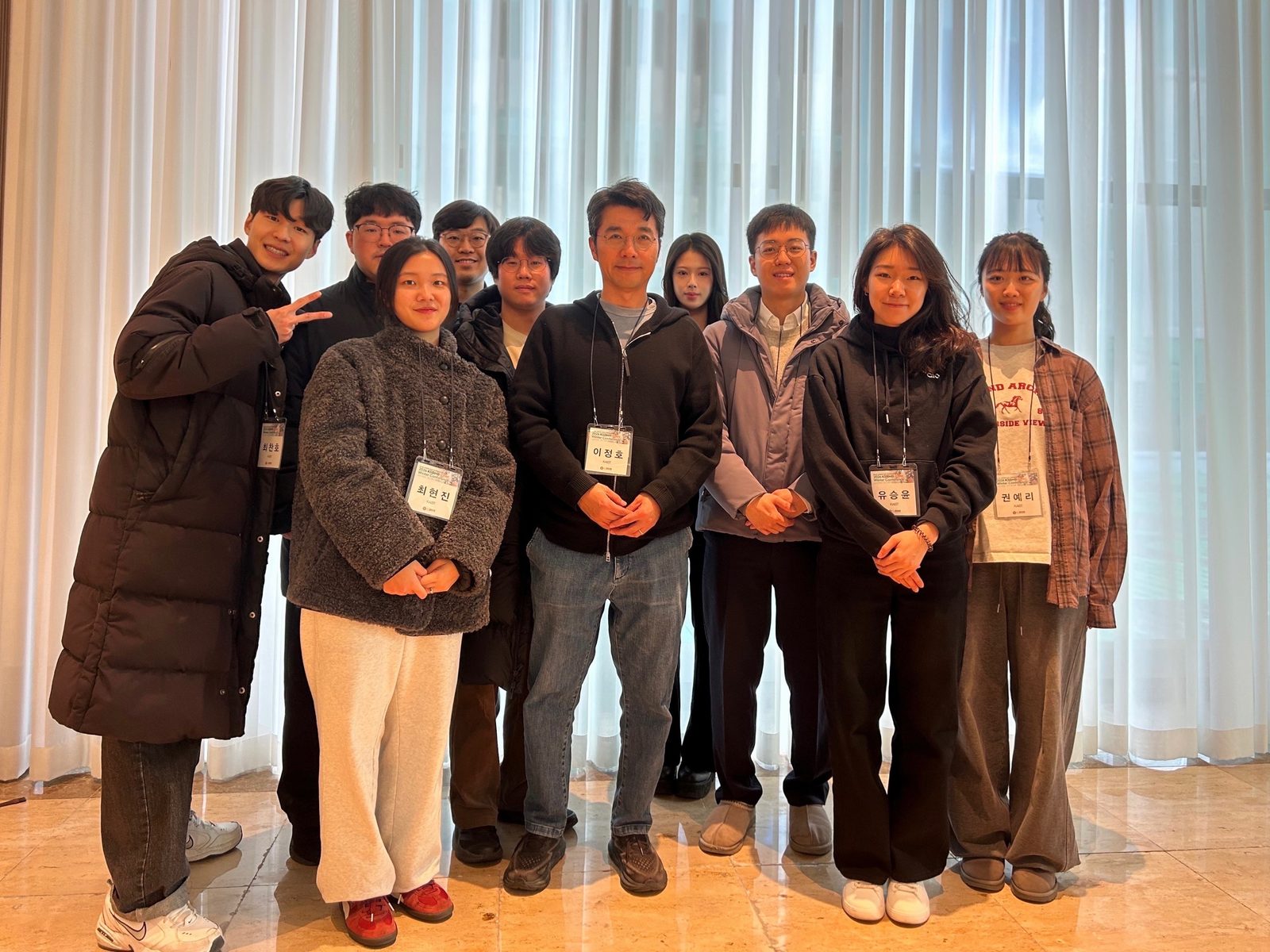
Translational Neurogenetics Lab members at the 2026 KSBMB-EMM Winter Conference. Members of the Translational Neurogenetics Lab attended the 2026 KSBMB-EMM Winter Conference, held from January 7 to 9, 2026, at Vivaldi Park.
The conference provided an opportunity to learn about recent advances in biochemistry and molecular biology, exchange ideas with fellow researchers, and spend time together as a lab.
-
News
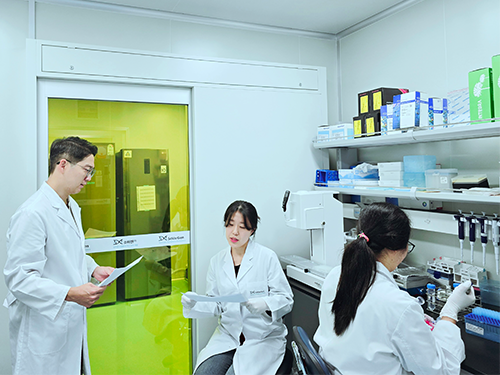
Photo courtesy of KAIST. SVG105, a drug candidate for intractable epilepsy, has been out-licensed to the Italian pharmaceutical company Angelini Pharma in a deal worth up to USD 550 million (about KRW 750 billion), including a non-refundable upfront payment, development and commercialization milestones, and royalties on sales.
SVG105 is an antisense oligonucleotide that targets mTOR. It is intended for focal cortical dysplasia (FCD), a leading cause of drug-resistant epilepsy in children, and is designed to act selectively on the pathway that drives seizures. The candidate is in preclinical development, with global clinical trials planned for 2027.
The drug grew out of the laboratory’s work on brain somatic mutations, and was developed by SoVarGen, the faculty start-up founded by Prof. Jeong Ho Lee.
-
Event
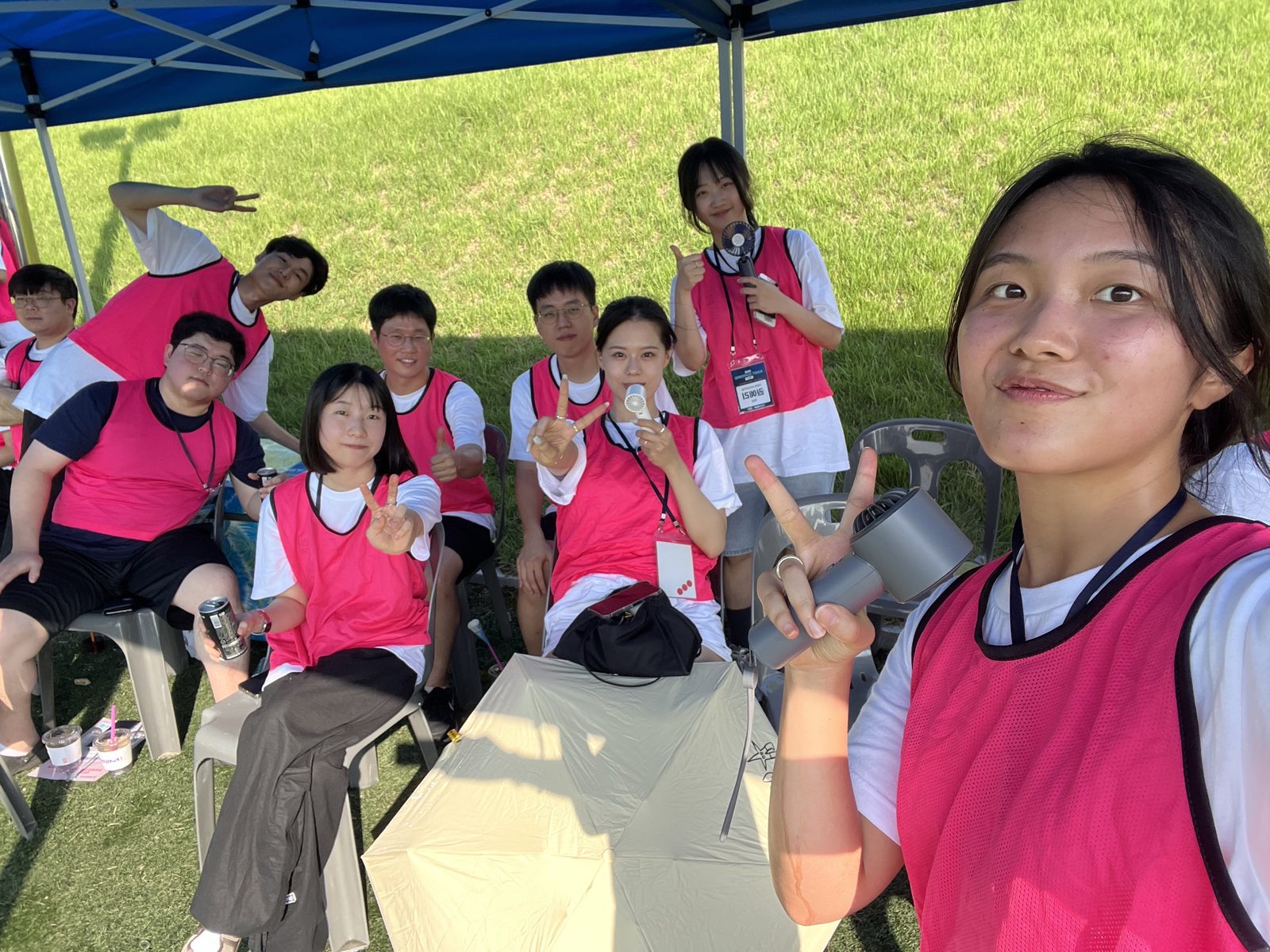
TNL members at the 2025 KAIST GSMSE Workshop. Members of the Translational Neurogenetics Lab participated in the 2025 KAIST Graduate School of Medical Science and Engineering (GSMSE) Workshop.
The workshop provided an opportunity to connect with colleagues across GSMSE and take part in team activities. Our lab members enjoyed spending time together outside the laboratory.
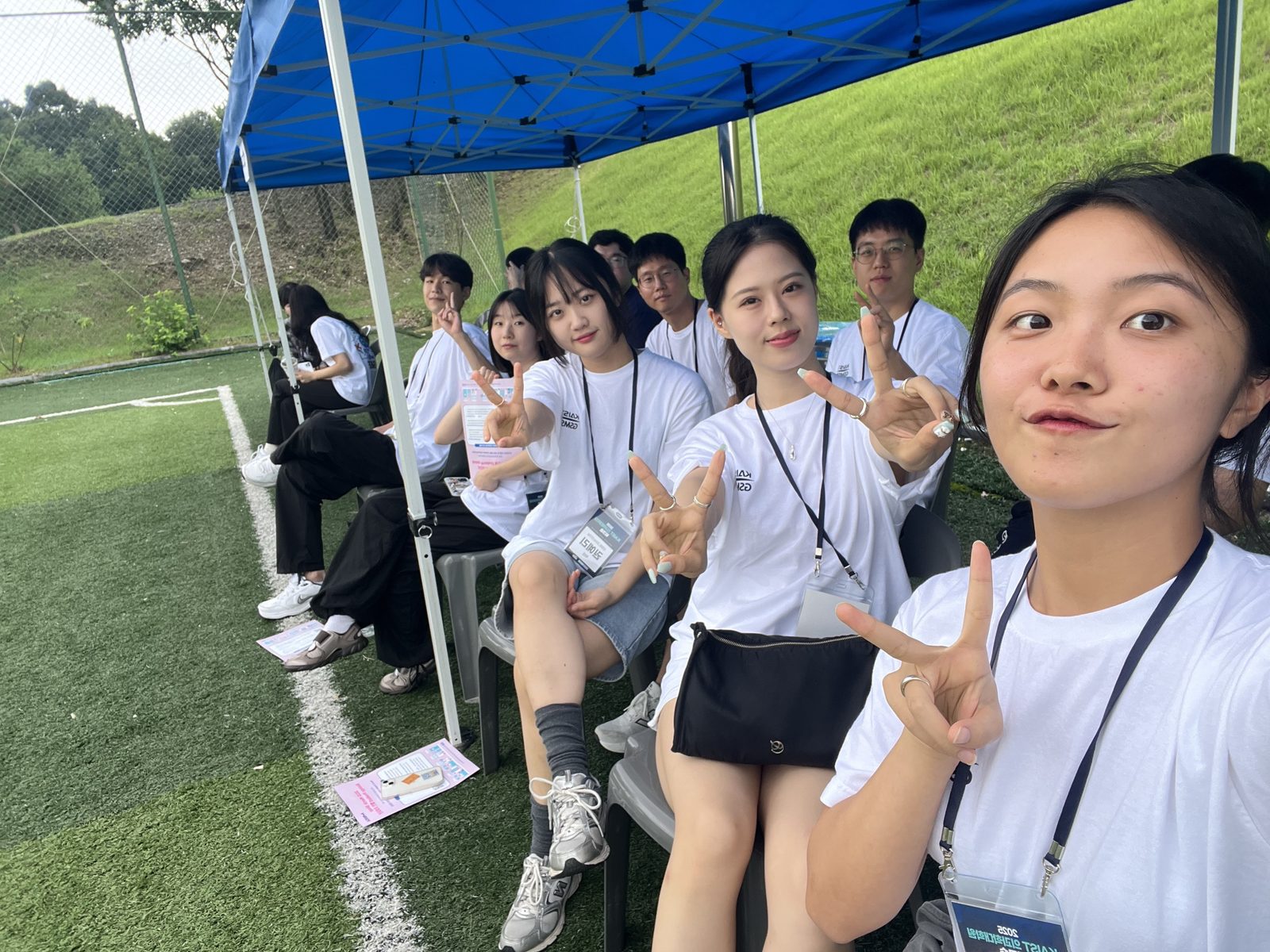
TNL members enjoying the workshop activities together. -
Paper
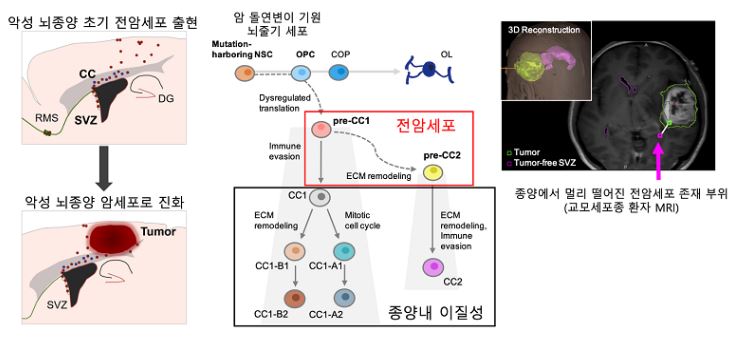
The study identified precancerous cells that initiate glioblastoma evolution and contribute to intratumoral heterogeneity. Image courtesy of KAIST. Dr. Hyun Jung Kim’s study, “Precancerous Cells Initiate Glioblastoma Evolution and Contribute to Intratumoral Heterogeneity,” has been published in Cancer Discovery.
The study identified precancerous cells that emerge during the early evolution of glioblastoma and demonstrated that these cells contribute to the development of diverse tumor cell states. These findings provide new insight into the origins of intratumoral heterogeneity, tumor evolution, and recurrence.
Dr. Kim served as the sole first author, and Professor Jeong Ho Lee served as the corresponding author.
Congratulations to Dr. Kim and all collaborators on this important achievement.
-
Award
Prof. Jeong Ho Lee was elected a full member of the Korean Academy of Science and Technology in the medical and pharmaceutical sciences section. He was one of 36 new full members for 2025, and one of seven KAIST faculty members among them.
Full membership is open to researchers with more than twenty years of activity who have produced original work and contributed substantially to their field. Candidates go through three rounds of review, with ten representative papers — including work from the previous five years — assessed for originality, quality and scholarly impact.
-
Paper
Work led by Dr. Jintae Kim, with Prof. Jeong Ho Lee as corresponding author, showed that mutated neurons making up less than 0.1% of the brain can disturb function across the whole organ and produce epileptic seizures. The study was published in Brain on June 25, 2024.
In mouse models, seizures appeared once roughly 8,000 to 9,000 mutated cells were present. In brain tissue from patients with intractable epilepsy, somatic mosaicism as low as 0.07% was observed.
The finding sets a floor for how much mutation is needed to cause disease, and informs how precisely genetic diagnosis and targeted treatment must detect it.
-
Event
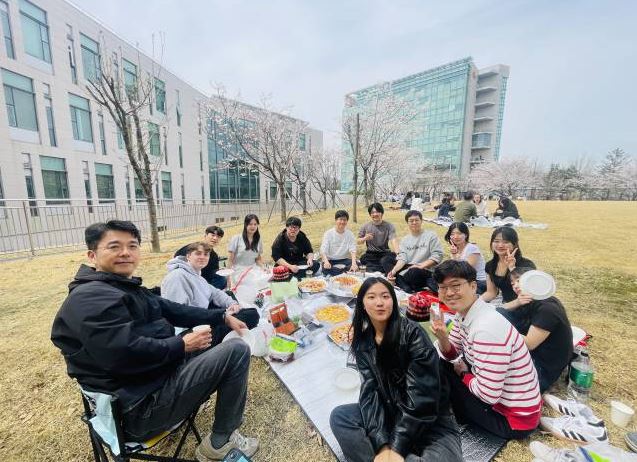
TNL members enjoying a spring strawberry party on campus. Members of the Translational Neurogenetics Lab gathered for a strawberry party on April 23, 2024.
The lab members enjoyed fresh strawberries and a relaxing spring afternoon together on campus. It was a welcome break from the laboratory and a chance to spend time together.
-
Event
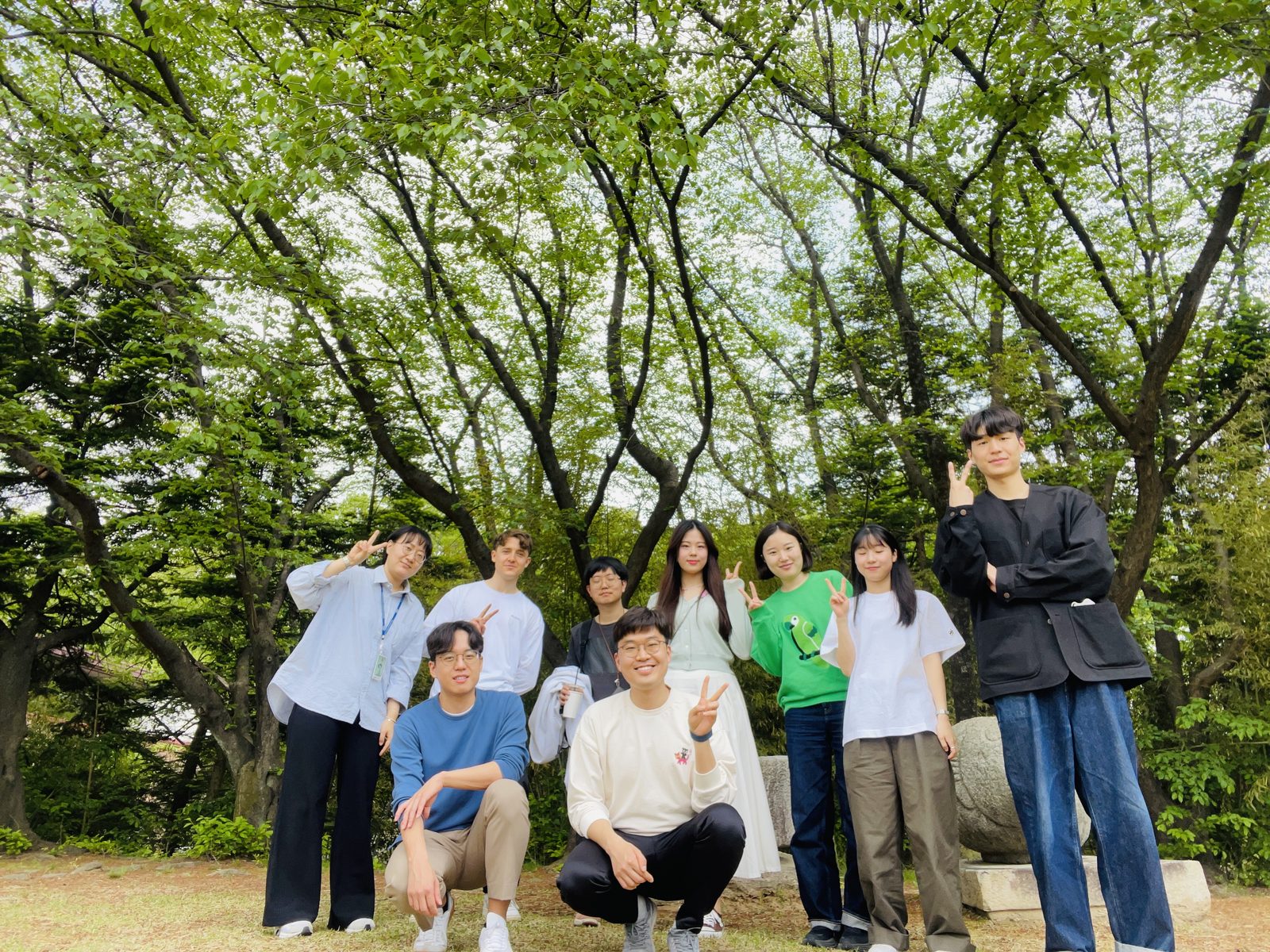
TNL members enjoying the 2023 Strawberry Party. Members of the Translational Neurogenetics Lab gathered for the 2023 TNL Strawberry Party on April 26, 2023.
The annual event gave the lab members an opportunity to relax, share food, and spend time together outside the laboratory.
-
Event
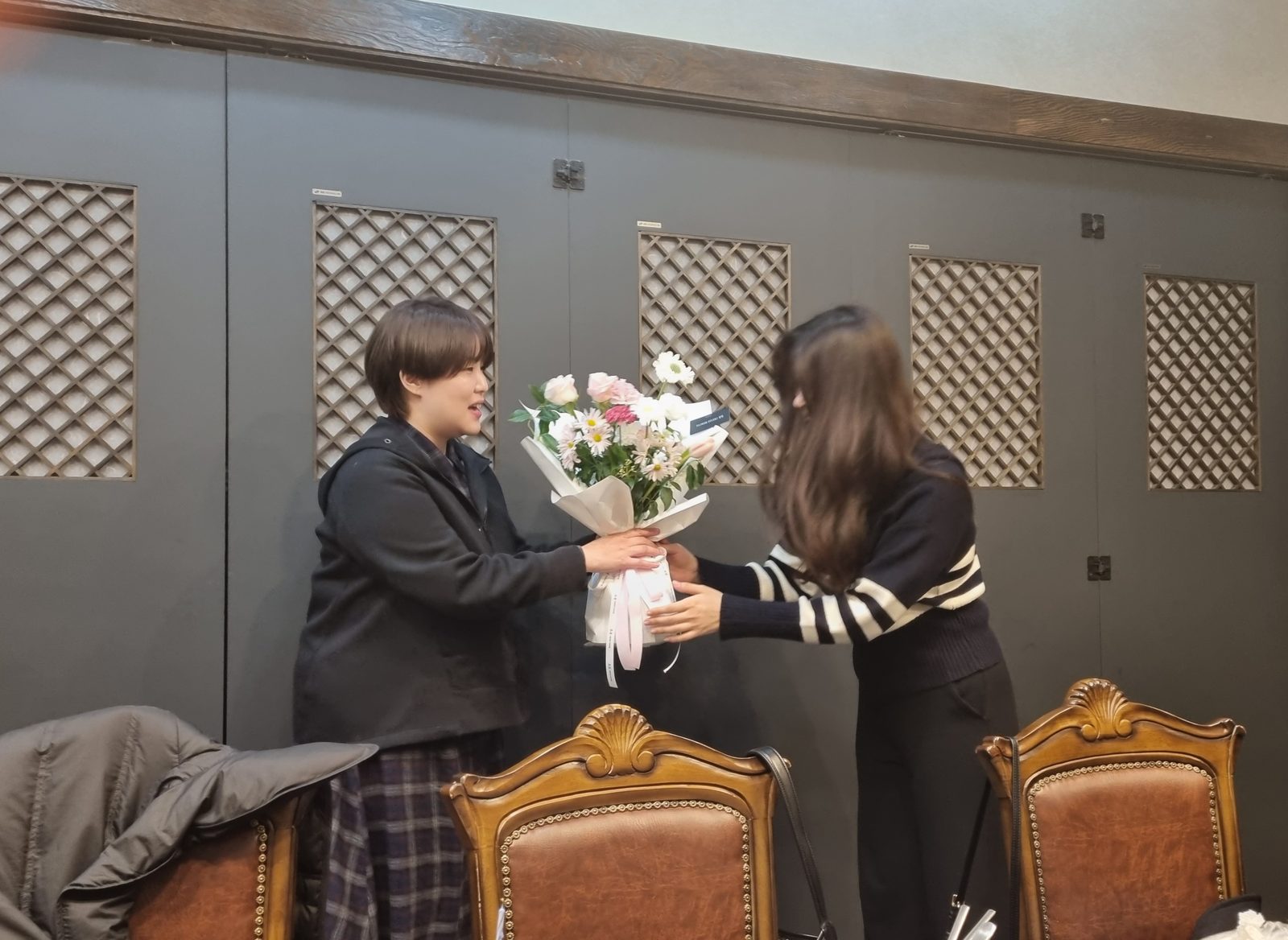
TNL celebrated Dr. Ara Ko's new faculty appointment at Severance Hospital. On February 20, 2023, TNL held a farewell gathering for Dr. Ara Ko as she prepared to begin a new chapter at Severance Hospital.
We sincerely thank Dr. Ko for her contributions to the laboratory and the wonderful memories we shared during her time at TNL. We also warmly congratulate her on her faculty appointment at Severance Hospital.
We wish Dr. Ko continued success in her new position and all the best in her future research and clinical work.
-
Paper
Work led by Dr. Ja Hye Kim, with Prof. Jeong Ho Lee as corresponding author, raised the genetic diagnostic rate in focal cortical dysplasia from about 50% to 80%. The study was published in Annals of Neurology on January 26, 2023.
The method selectively detects mTOR pathway mutations in resected brain tissue, starting from the observation that only a very small fraction of brain cells needs to carry the variant to change seizure activity across the brain.
-
Paper
Work led by Dr. Il Bin Kim, with Prof. Jeong Ho Lee, Prof. Jung Kyoon Choi and Prof. Eunjoon Kim as corresponding authors, established a Korean autism family cohort of 3,708 people — the first study of this scale in Asia — and found that variants in non-coding regions of the genome can cause autism. The study was published in Molecular Psychiatry on July 15, 2022.
Using Korean stem cells, the team showed that such variants can abnormally alter the expression of genes located up to 500,000 base pairs away.
-
News
Korea’s Ministry of Food and Drug Safety approved a Phase 1 clinical trial of SVG101, an mTOR inhibitor based on everolimus, for focal cortical dysplasia type 2 (FCD Type 2) — a form of drug-resistant epilepsy.
The trial was filed by SoVarGen, the faculty start-up founded by Prof. Jeong Ho Lee, on the basis of the laboratory’s work on brain somatic mutations in the mTOR pathway.
-
Paper
Work led by Se Yeon Kim, with Prof. Jeong Ho Lee as corresponding author and in collaboration with Sorbonne University in Paris, detected pathogenic brain-specific mutations in the cerebrospinal fluid of patients with intractable epilepsy. The study was published in Annals of Neurology.
Because the blood-brain barrier keeps brain-derived cell-free DNA out of plasma, these mutations had previously been identified only in resected tissue. Sampling cerebrospinal fluid by lumbar puncture offers a minimally invasive route to the same diagnosis, without surgery.
-
Paper
Work led by Dr. Myeong Heui Kim and Il Bin Kim, with Prof. Jeong Ho Lee as corresponding author, showed that acquired brain-specific somatic variants contribute substantially to schizophrenia. The study was published online in Biological Psychiatry on February 4, 2021.
In brain tissue from 27 patients with schizophrenia, the variants were concentrated in genes that govern neurotransmission and neurodevelopment, suggesting that they damage neural circuits and can cause the disorder.
-
Award
Prof. Jeong Ho Lee received the 16th Kyung-Ahm Prize in the life sciences category, awarded by the Kyung-Ahm Education and Culture Foundation. The prize carries KRW 200 million, and the ceremony was held on November 6, 2020 in Busan.
The award recognized his discovery that brain somatic mutations cause intractable brain disorders, the clinical trials under way to treat them, and his genomic work on cortical developmental disorders and Alzheimer’s disease.
-
News
SoVarGen, the faculty start-up founded by Prof. Jeong Ho Lee in May 2018, raised KRW 35 billion in a Series B round. NH Investment & Securities, HB Investment, BNK Investment, KN Investment, Atinum Investment and Medivate Partners took part. With the KRW 10 billion Series A of September 2018, the company had then raised KRW 45 billion in total.
The company’s name stands for Somatic Variations Genomics. Its lead program is an antisense oligonucleotide for intractable epilepsy in children, built on the laboratory’s work on brain somatic mutations.
-
Award
Prof. Jeong Ho Lee won the Early-Career Scientist Award of the 2020 Innovators in Science Award, administered by the New York Academy of Sciences in partnership with Takeda Pharmaceutical Company. He was recognized for his work on genetic mutations in the brain that cause rare developmental brain disorders.
-
Award
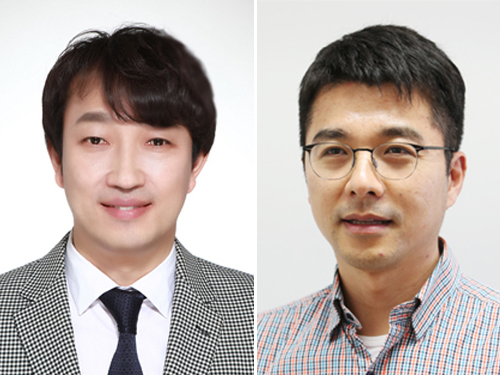
The two KAIST faculty members selected in 2019. Photo courtesy of KAIST. Prof. Jeong Ho Lee’s work was selected for Korea’s Top 100 National R&D Achievements of 2019, in the life sciences and marine category, for identifying the root causes of malignant and pediatric brain tumors and developing new approaches to treating them.
-
Paper
Nam Suk Sim’s study, “Precise detection of low-level somatic mutation in resected epilepsy brain tissue,” was published online in Acta Neuropathologica on August 3, 2019, with Prof. Jeong Ho Lee as corresponding author.
The work established a way to detect the brain somatic mutations that cause intractable epilepsy, raising diagnostic accuracy from below 30% to as high as 100%.
The method is being made available as a diagnostic service through SoVarGen, the faculty start-up founded by Prof. Jeong Ho Lee.
-
Award
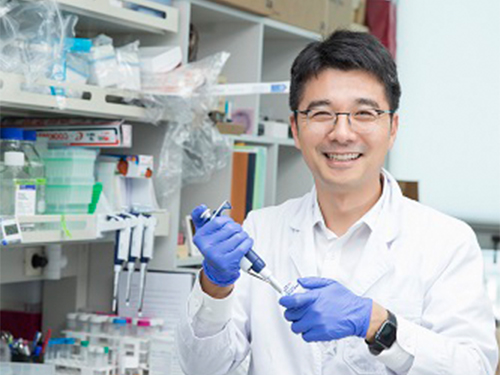
Photo courtesy of KAIST. Prof. Jeong Ho Lee was selected as the KAISTian of the Year for 2018, the award KAIST members regard as the institution’s highest honor.
The selection cited his work on how acquired brain mutations cause intractable epilepsy and how it can be treated, published in Nature Medicine in 2015 and 2018; his role as the first Korean member of the International League Against Epilepsy committee that sets genetic-pathological diagnostic criteria for intractable epilepsy; and the 2018 Nature paper that overturned the prevailing view of where the driver mutations of glioblastoma arise.
-
Paper
A paper by Nam Suk Sim, Dr. Jae Seok Lim and Woo Kyeong Kim on somatic mutations in patients with mild malformation of cortical development has been published in Neurology Genetics.
-
Paper
A paper by Hyun Yong Koh and Jae Seok Lim on the mechanism of epileptogenicity in pediatric brain tumors has been published in Nature Medicine.
-
Paper
A paper by Dr. Joo Ho Lee, Jun Sung Park and Woo Kyeong Kim on the cells from which glioblastoma arises has been published in Nature.
-
Paper
A paper by Sang Min Park, Dr. Jae Seok Lim and Woo Kyeong Kim on how somatic mutations give rise to cortical malformation has been accepted in Neuron.
- Award Hyun Yong Koh Receives the 2017 American Epilepsy Society Young Investigator Award
-
Award
Prof. Jeong Ho Lee was selected as one of five Young Scientists in the first cohort of the Suh Kyungbae Foundation, announced on September 19, 2017. The certificates were presented the previous day.
The other four were Prof. Chanhee Kang (Seoul National University), Prof. Dohoon Kim (University of Massachusetts Medical School), Prof. Jeong-Hoon Lim (UNIST) and Prof. Kyuha Choi (POSTECH). Calls for proposals ran from January to March, followed by a panel review in July, presentations and discussion in September, and final confirmation by the board on September 14.
Each project receives KRW 300–500 million a year for five years. The foundation, established in 2016 with a personal endowment of about KRW 300 billion in shares from Suh Kyung-Bae, chairman of Amorepacific Group, funds early-stage creative research in the life sciences on the principle of supporting the scientist rather than the project.
- Award Hyun Yong Koh Receives a Presentation Award at the 2017 KOGO Meeting
- Award Hyun Yong Koh Receives the Best Presentation Award at the 22nd Korean Epilepsy Society Meeting
- Award Joo Ho Lee Receives a Travel Award at the 24th Asia Pacific Cancer Conference
- Award Sang Min Park Receives the 2017 KSMCB Young Scientist Award
- Award Jang Geun Kim Receives a Best Poster Award at the 2017 KSBMB Annual Meeting
-
Award
Sang Min Park received a fellowship award at the Cold Spring Harbor Asia conference on cilia and centrosomes.
-
Award
Prof. Jeong Ho Lee was named a founding member of the Young Korean Academy of Science and Technology (Y-KAST), in the medical and pharmaceutical sciences section.
Y-KAST was launched on February 24, 2017 by the Korean Academy of Science and Technology with 73 founding members, average age 42. Membership is capped at 150 and open to researchers aged 45 or under, with the aim of building international networks among younger scientists.
- Award Joo Ho Lee Receives a Best Poster Award at the KOGO Winter Symposium
- Award Joo Ho Lee Receives the 2017 AACR–American Brain Tumor Association Scholar-in-Training Award
- Award Jang Geun Kim Receives an Award at the 2016 Research Notebook Competition
-
Paper
A paper by Dr. Jae Seok Lim, Woo Il Kim and Sang Min Park showing that somatic mutations in TSC1 and TSC2 cause focal cortical dysplasia has been accepted in the American Journal of Human Genetics.
-
Award
Dr. Jae Seok Lim received an Outstanding Dissertation Award at the 6th S-OIL Dissertation Awards.
-
Award
Prof. Jeong Ho Lee received the Young Investigator Prize in the basic science category at the 26th Bunsch Medical Award ceremony, held by the Korean Academy of Medical Sciences and Boehringer Ingelheim Korea on November 23, 2016.
- Award Sang Min Park Receives a Best Poster Award at the KSMCB Annual Meeting
- Award Jang Geun Kim Receives the 2017 TJ Park Science Fellowship
- Award Jee Ye Kahng Receives an Excellence Award at the 2016 URP Workshop
-
Award
Dr. Jae Seok Lim, a graduate of the Graduate School of Medical Science and Engineering, received a Young Investigator Travel Award.
- Award Sang Min Park Receives a Best Poster Award at the KSBMB Annual Meeting
-
Award
Prof. Jeong Ho Lee was selected for KAIST’s Top 10 R&D Achievements of 2015.
The selection recognized the first identification of brain-specific somatic variants in MTOR from the brain tissue of patients with intractable epilepsy, and the treatment approach the team proposed on the basis of animal models and drug experiments.
- Award Jee Ye Kahng Selected for the Undergraduate Research Participation (URP) Program
-
Award
Citizens United for Research in Epilepsy (CURE) announced on September 7, 2015 that Prof. Jeong Ho Lee would receive the 2015 Pediatric Epilepsies Research Award.
-
Award
Jae Seok Lim received the Agarwal Award, given at KAIST to researchers with outstanding achievements in basic life science and medical science.
- Award Jae Seok Lim Receives the 2015 KSBMB New Drug Research Award
-
News
Work led by Prof. Jeong Ho Lee showed that somatic mutations in MTOR occurring only in the brain cause focal cortical dysplasia, a leading cause of intractable epilepsy. The study was published online in Nature Medicine on March 23, 2015.
The team also showed that rapamycin, which suppresses mTOR activity, reduced seizures — pointing to a treatment for a disorder that had been managed mainly by surgery. Prof. Dong Seok Kim of Yonsei University College of Medicine contributed the clinical perspective as a co-author.
-
Paper
A paper by Jae Seok Lim and Woo Il Kim on brain somatic mutations in MTOR causing focal cortical dysplasia type II has been published in Nature Medicine.
-
Award
Jang Geun Kim graduated first in his undergraduate class and received the award of the Minister of Science, ICT and Future Planning.
-
Award
Prof. Jeong Ho Lee was selected as a Leading Scientist by the Korean Academy of Science and Technology (KAST).
-
Award
Prof. Jeong Ho Lee was named the recipient of the 6th Asan Award in Medicine in the Young Investigator category, newly established that year by the Asan Foundation.
-
News
The Korean Society for Molecular and Cellular Biology featured the laboratory in its series of laboratory profiles, introducing the lab’s work in neurogenomic medicine.
-
News
A study led by Jeong Ho Lee, then a postdoctoral researcher at UC San Diego, found that de novo somatic mutations in three genes governing cell size and proliferation are a major cause of hemimegalencephaly, a rare disorder in which one hemisphere of the brain grows abnormally large. The work was published in Nature Genetics.
Because several already-approved drugs dampen the same signaling pathway, the finding raised the possibility of treating the disorder with medication rather than surgery.
-
News
A study with Jeong Ho Lee as first author, published in Science, showed that mutations in TMEM216 and TMEM138 cause Joubert syndrome, a condition that includes features of autism.
The two genes became neighbors roughly 260 million years ago and have evolved together since, coming to govern the coordinated delivery of factors essential for assembling the cell’s cilium. After the translocation their expression levels diverged sharply and were then tightly co-regulated.
-
News
Jeong Ho Lee was the first graduate of a Korean medical school to enter the national research service program, which allows scientists to meet their military obligation through research. He completed three years at the Department of Pharmacology, Yonsei University College of Medicine, studying neurodegenerative disease, before leaving for a research position in the United States.
In the interview he argued that military service is the single largest obstacle for men who decide to become basic medical scientists, and that the program is a practical way to keep a research career from being interrupted.